

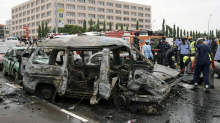
In the course of my meditation last week, I checked everywhere for a good material that could help to condense Nigerian’s problems and prospects into street value (reason best known to me). Sad as this may be, top on the possible options was Eedris Abdulkareem’s controversial but popular hip-hop track titled: Nigeria Jagajaga. I observed that the music aptly summarized the present realities in virtually all facets of our nation. National economy, educational and health facilities, public infrastructures, etc., are dilapidating with reckless abandon such that one is forced to wonder if life can ever get better for the average citizens of this potentially great nation. What beats my imagination, however, was the flamboyant manner in which the drums were rolled out to celebrate our 50 years of “independence” despite the wide spread poverty and despair across the land; coupled with the madness that resulted in the untimely death of innocent Nigerians in a blast that left our security apparatus and personnel helpless.
 Last Friday, October 1, 2010, while many scrambled to partake in the golden jubilee charade in commemoration of our 50th birthday, I chose to pitch my tent with the few that stayed neutral. I remained indoors, wishing for divine intervention in the fortunes of my dear country - Nigeria. My reason was that 50 years after the demand for self rule was achieved (without sweat and blood), this country’s leaders have not been able to get their fundamentals right. The stuffs that were promised by our ancestors over 50 years ago (road, water, electricity, etc., etc.) are the same garbage we are still getting from the present crop of politicians in form of manifestos in today’s fast-developing world. What a Good People of a Great Nation!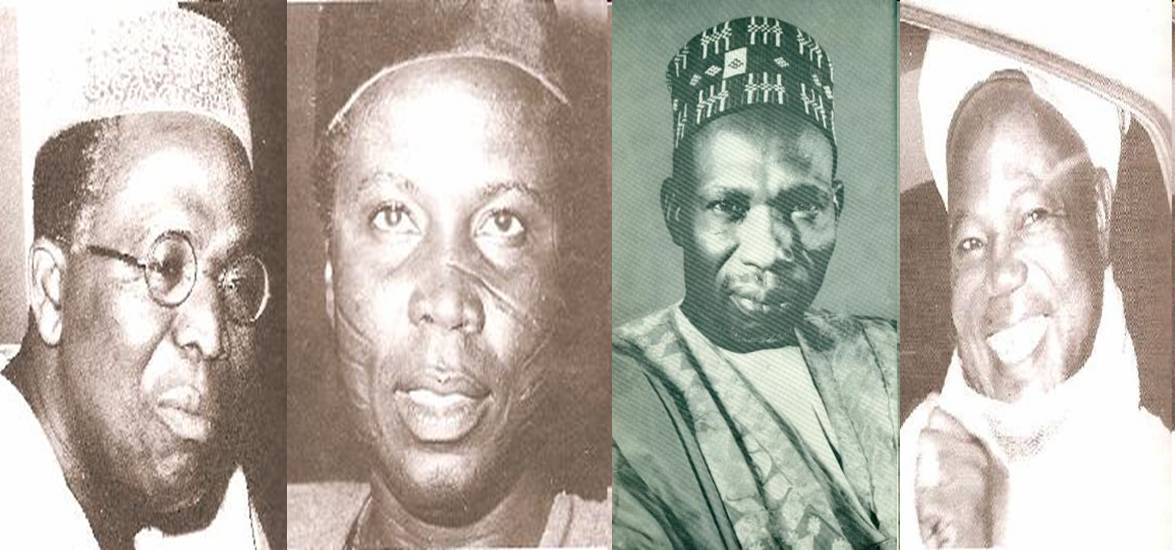
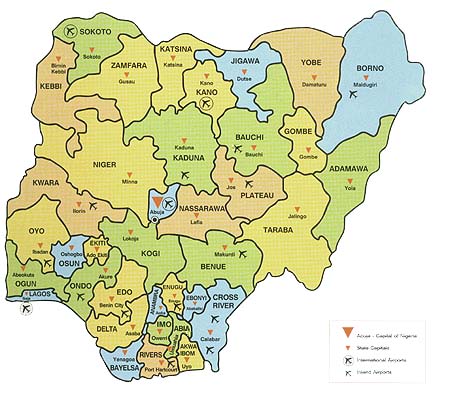
In the spirit of Golden Jubilee, permit me to chronicle the genesis of this country; catalogue the exodus into wilderness; and chart a course to the proverbial Canaan. Nigeria is said to be a mere geographic expression because it was formerly a conglomerate of several ethnic groups, each occupying a geographical enclave with different cultures, traditions, religions, etc. It is also an incontrovertible fact that Nigeria is of British making due to the annexation of Lagos by its agents in the year 1861. After the successful annexation, Britain used the Crown Colony of Lagos as a base from where she spread her tentacles to the hinterlands of what later became the Federal Republic of Nigeria. But actual Colonialism commenced after the 1884/1885 Berlin Conference, during which areas like the Oil Rivers protectorate and a few others were proclaimed.
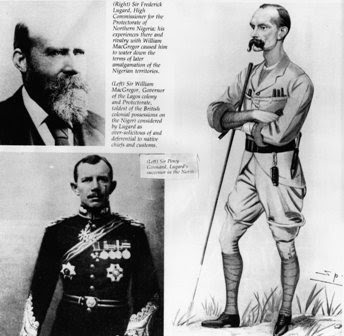
In the year 1898, several hitherto autonomous ethnic groups were, without due consultations, lumped together and was christened ‘Nigeria’ by Miss Flora Shaw, a Correspondent of The Times who later got married to Sir (Lord) Fredrick Lugard. On January 1, 1900, the protectorate of Northern and Southern Nigeria were constituted and the two were later amalgamated in the year 1914, with Lord Lugard as the first Governor-General of Nigeria. The amalgamation year thus mark the beginning of Nigeria’s woes. Acting on instructions, Lord Lugard established the Nigerian Council that has 36 members - 23 European official members and 13 non-official members out of which 7 were still Europeans with only 6 Nigerians. What’s more ridiculous is that while the 7 European non-official members were assigned to oversee important businesses like shipping, banking and mining, the microscopic 6 Nigerians were assigned to oversee trivial issues such as chieftaincy.
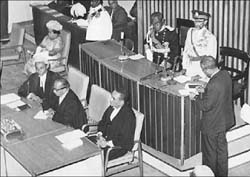
The Clifford Constitution of 1922 further ridiculed Nigeria and Nigerians. It was a clear reflection of ‘Divide and Rule’ policy due to its isolation of the Northern Province from other parts of Nigeria. It further ensured that the then Legislative Council is dominated by Europeans and also excluded the few Nigerians from the all-important Executive Council. There was the Richards Constitution of 1946 which was the result of pressures from a few nationalists to Sir Bernard Bourdillon, the Governor-General between 1935 to 1943. But that Constitution also had its defects since it made no attempt to change the existing European-dominated executive council, and, worse yet, Nigerians were not consulted during its drafting. It also committed a huge catastrophe by dividing Nigeria into three unequal sizes by making the Northern region bigger than the Western and Eastern regions put together, thus fanning the embers of tribalism and sectionalism in the country (which still holds sway till date).
The Macpherson Constitution of 1951 also created several crises in the fabrics of our nation that led to the Kano riot of 1953 as well as the motion by Chief Anthony Enahoro for Nigeria to be independent by 1956. The many defects of that Constitution resulted in the 1953 Constitutional Conference during which agreements were reached to provide for greater regional autonomy as well as the removal of powers of intervention by the centre. On its part, the Lyttleton Constitution of 1954 was criticised for its inability to allay the fears of marginalisation raised by the minority ethnic groups. The 1956 London Constitutional Conference that was supposed to right the wrongs could not hold due to allegations made by Chief E. O. Eyo, the Chief Whip in the Eastern House of Assembly, that Dr. Nnamdi Azikiwe, Premier of the Eastern region, had converted public money to his private use through the African Continental Bank (ACB). Although the conference later held between May 23 and June 26, 1957, it could not achieve much due to high level acrimony among some Nigerian nationalists.
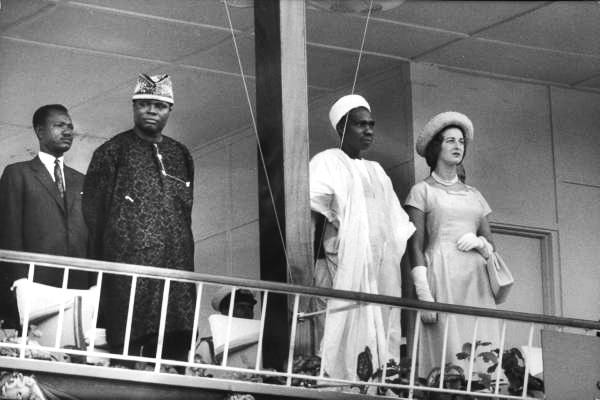
However, the September 29 to October 27, 1958, London Constitutional Conference was very fruitful as it considered fundamental issues such as self-determination and independence. Some of the resolutions reached at that conference led to the general elections of December 1959 which saw Sir Abubakar Tafawa Balewa of the NPC emerge as Prime Minister with Dr. Nnamdi Azikiwe of the NCNC as Ceremonial President. Another conference also took place in Lagos between July 25 and 26, 1963, resulting in Nigeria becoming a Federal Republic on October 1, 1963. In my opinion, the foregoing captures the genesis of our dear country.
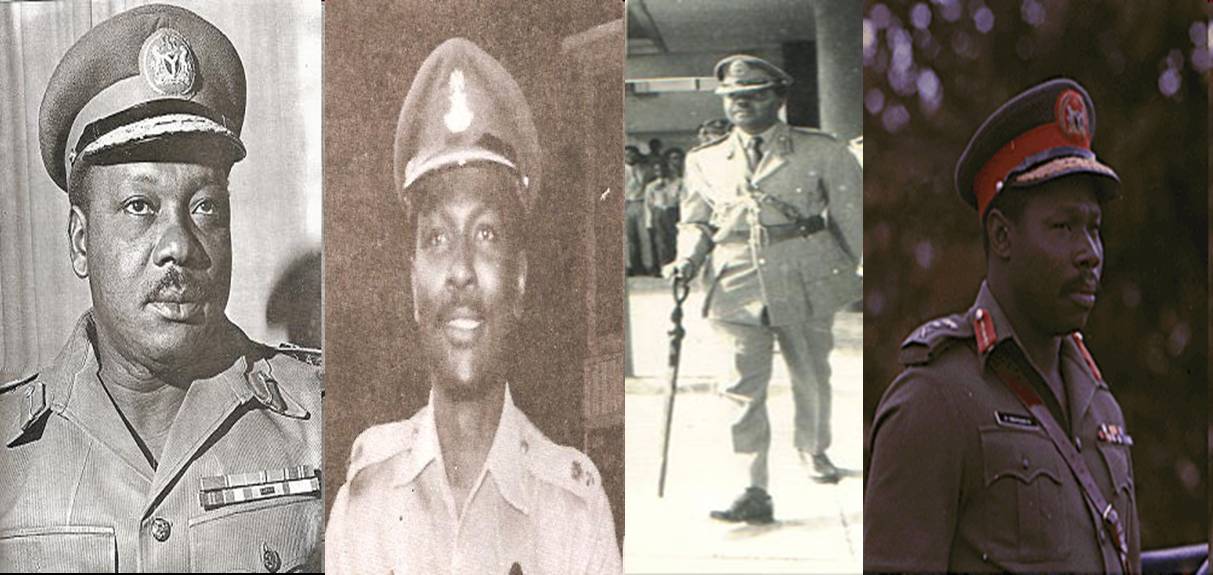 Nigeria’s exodus into wilderness could be ascribed to reasons for the disruption of the first Republic on January 15, 1966, via a very bloody military coup that led to the death of some prominent Nigerians including Alhaji Balewa, Sir Ahmadu Bello (Premier of Northern region), Chief S. L. Akintola (Premier of Western region), Chief Okotie Eboh (Minister of Finance), etc. In a nationwide broadcast after the coup, the ring leader, Major Chukwuma Kaduna Nzeogu said: “The aim of the Revolutionary Council is to establish a strong, united and prosperous nation free from corruption and internal strife.” My reason for taking time to itemise the much I know of Nigeria’s history from 1861 to 1966 is because I want you to note the reason for the first military intervention in governance and also appraise the current trends in the political and social landscape to ascertain if we’ve actually learnt anything - 50 years into independence.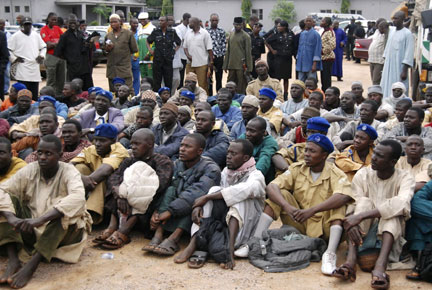
This year of Golden Jubilee (Year 2010 when Nigeria became 50) should be a period for sober reflection rather than one for merry-making as is presently the case. I hold this view because a good number of the wrongs that made Major Nzeogu and his gang to strike in the first republic are still very much with us. Electoral malpractices, embezzlement of public funds, kidnapping, brigandage, and the likes are gradually becoming a way of life for our people. As the nation mark another independence anniversary, the media is awash with congratulatory messages to persons who attain political power under questionable circumstances. What’s more intriguing is that those sending some of these messages are the very persons who should condemn the wrongs being perpetuated by the political elite. But such won’t happen since many of our political, traditional and religious leaders are more interested in what they can get from the system, instead of what they should do to save it from collapse.
Nevertheless, for our journey to the proverbial Canaan to be successful, all hands must be on deck to work things out. We must learn to speak in one accord and stop the infighting. Citizens and civil society groups must begin to fashion and sponsor programmes that would transfer the billions of dollars being derived from Crude Oil into tangible dividends. The era of white elephant projects must become history. From available statistics, Nigeria has the necessary human and mineral resources to deal with poverty. Our local, state and federal roads should meet global standard; our schools and health care facilities should deliver quality services; electricity and shelter should be adequate, sufficient and affordable. Those countries where some of us are running to for comfort did not fall from heaven. They were carefully planned and built by human beings like us through commitment. We can do same here; yes, we can. There are enough resources to go round and impact the lives of each citizen positively if only we can defeat political tyranny and corruption.
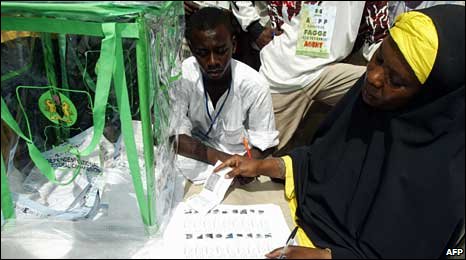 The world over, better-life doesn’t come on a platter; it must be demanded for. We are now at the threshold of “do-or-die” (apologies to ex-President Olusegun Obasanjo). We either rise up in unison to demand our fundamental rights or forever remain in servitude to shield folks who are primarily in government for the stupendous salaries and allowances they would collect. Let us all rise up to the demands of the moment, fellow compatriots. Join any credible pressure group within your vicinity and collectively make your demands on a wider spectrum. Register to be qualified as a voter in all elections. Ensure that you speak up whenever and wherever you notice fraud or injustice. Do not support any candidate on sentiments; get to know his/her plans for Nigerians before lending your support. Remember, the choice is in your hands and your vote is what you have to challenge and defeat the present myths. The goal is to secure our future and those of generations yet unborn.
Take a stand now so that you won’t fall for just any rubbish in 2011. You must go out there to cast your vote and defend same. No more sitting on the fence, please. Save Nigeria, secure your future and that of future generations!
