
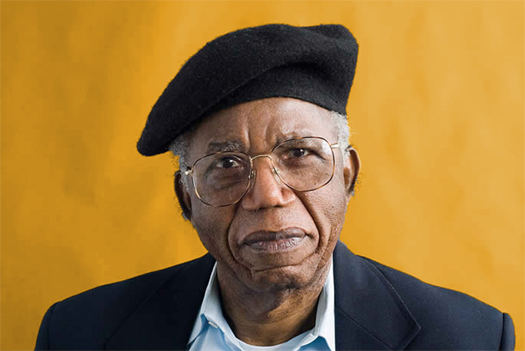
It is becoming increasingly worrisome that Professor Chinua Achebe will end his long, glorious career just as it began - mired in controversy.
And that is not the best epitaph any patriotic Nigerian would want to read about a man who, to my mind, should in his characteristic humility accept the honour of being the greatest Nigerian alive.
At the beginning of his career, Professor Achebe spiritedly fended off charges of plagiarism from a fellow Igbo when he published his best known Things Fall Apart. His accuser had charged then that the then young Achebe reworked and took the credit for his own account of life in pre colonial Igbo society.
For very obvious reasons, Professor Achebe’s accuser was cajoled and persuaded to drop his charge rather than spoil the party for a rising star. In most Nigerian traditional societies, it is considered a taboo for a man to attempt to pour sand into the bowl of garri of another member of society.
But we are talking of the 1960’s, a time when the internet existed in the imagination of men. In today’s jet age, Professor Achebe would have had more explanation to do. When Professor Wole Soyinka was awarded the Nobel Prize for Literature in 1986, many Nigerian critics in the Yoruba speaking south west expressed indignation with the choice by positing that Professor Achebe, an Igbo, not Professor Soyinka who is ‘one of their own’, indeed a Yoruba man who globally campaign on behalf of Biafra was better suited for the award.
But we are talking of the 1960’s, a time when the internet existed in the imagination of men. In today’s jet age, Professor Achebe would have had more explanation to do. When Professor Wole Soyinka was awarded the Nobel Prize for Literature in 1986, many Nigerian critics in the Yoruba speaking south west expressed indignation with the choice by positing that Professor Achebe, an Igbo, not Professor Soyinka who is ‘one of their own’, indeed a Yoruba man who globally campaign on behalf of Biafra was better suited for the award.
In fifty years, Things Fall Apart has become an all time classic and has turned to be one novel that placed Nigeria on a high pedestal. Take it or leave it: if ordinary Nigerians had a hand in awarding the 1986 Nobel Prize for Literature, it is most likely Professor Achebe would have picked it. Yet there were those who argued then, rightly or wrongly, that Professor Achebe was probably sidelined by the ‘unsettled dust’ over the plagiarism charge that greeted Things Fall Apart.
Nearly fifty years on, Professor Achebe is again in the eye of the storm. He has just published his war memoirs, There Was A Country, his own account, captured from a safe distance far from the trenches, of the 30 month long civil war that consumed an estimated one million lives. So far, the raging debate on the book is set to dwarf the controversy that surrounded Things Fall Apart. At issue and the portion of the book that has proved to be controversial is the role Professor Achebe said certain Nigerians played in an admittedly uncivil war that some Nigerians prefer to refer to as genocide.
Nearly fifty years on, Professor Achebe is again in the eye of the storm. He has just published his war memoirs, There Was A Country, his own account, captured from a safe distance far from the trenches, of the 30 month long civil war that consumed an estimated one million lives. So far, the raging debate on the book is set to dwarf the controversy that surrounded Things Fall Apart. At issue and the portion of the book that has proved to be controversial is the role Professor Achebe said certain Nigerians played in an admittedly uncivil war that some Nigerians prefer to refer to as genocide.
Specifically, he hinted that Chief Obafemi Awolowo, first premier of the defunct Western Region and his principal, then Head of State, General Yakubu Gowon, displayed genocidal tendencies when the federal government adopted hunger as a weapon of war. For obvious reasons, we have to excuse General Gowon: he was the head but Chief Awolowo, his federal commissioner (minister) of finance is credited with initiating moves to end the war.
Truth is, there is nothing new or original in what Professor Achebe wrote; if anything, what he wrote should be a matter that appeared settled while Chief Awolowo lived. Way back in1979 and as he did in several publications before then, Chief Awolowo, typical of him, maintained his ground that, in war time there is no point feeding an adversary to fight you. He was convinced till the end that had the vital food supply lines to combatants in the trenches not been cut, chances were the needless war could have dragged far much longer and many more lives would have been lost.
Truth is, there is nothing new or original in what Professor Achebe wrote; if anything, what he wrote should be a matter that appeared settled while Chief Awolowo lived. Way back in1979 and as he did in several publications before then, Chief Awolowo, typical of him, maintained his ground that, in war time there is no point feeding an adversary to fight you. He was convinced till the end that had the vital food supply lines to combatants in the trenches not been cut, chances were the needless war could have dragged far much longer and many more lives would have been lost.
Of course, the first casualty of the decision was the ordinary Biafran who, in any case was forced to cut his ration as sacrifice toward prosecuting the war. Expectedly, the unwilling sacrifice ended when supply lines were cut after which the hunger pangs that had been the lot of struggling and sacrificing Biafrans became pronounced among the combatants on the battle front. If truth be told, hunger-induced weak limbs, not shortage of firearms and certainly not the absence of young men to handle those firearms killed the Biafran dream. And that precisely was the aim Chief Awolowo said the federal government sought to achieve by cutting vital food supply lines to defunct Biafra.
To be continued
Written by Abdulrazaq Magaji
Magaji wrote from Abuja
To be continued
Written by Abdulrazaq Magaji
Magaji wrote from Abuja


That book should be banned from entering Nigeria as we cant afford another war because of some fictional write up. Danmalik
ReplyDeleteWhat has he written/said that had no been written/said before or that is new? Or is it because he mentioned Awolowo, I am sure if he had mention Gowon alone, the story would have been different. Is Awolowo a saint?
ReplyDeleteWhy are the yorubas stupid attacking Achebe just because he called Awolowo! Is this the first time u are hearing such story or is he the first person to write about it? U people can say what ever u like. Achebe is a hero and a living Legend.
ReplyDeleteOpen Letter to Awoist: It is time to Apologize to Ndigbo for that Starvation Policy By Adewale Francis
ReplyDeletePosted: October 10, 2012 - 04:40
By Adewale, Francis
“But when I went what did I see? I saw the kwashiorkor victims. If you see a kwashiorkor victim you’ll never like war to be waged. Terrible sight, in Enugu, in Port Harcourt, not many in Calabar, but mainly in Enugu and Port Harcourt. Then I enquired what happened to the food we were sending to the civilians. We were sending food through the Red Cross, and CARITAS to them, but what happen was that the vehicles carrying the food were always ambushed by the soldiers. That’s what I discovered, and the food would then be taken to the soldiers to feed them, and so they were able to continue to fight. And I said that was a very dangerous policy, we didn’t intend the food for soldiers. … So I decided to stop sending the food there. In the process, the civilians would suffer, but the soldiers suffered most.” -Chief Obafemi Awolowo.
We can either chose to live in denial and pretend that Awo never participated in the terrible decision to starve people of eastern Nigeria of foods and medicine during the Biafran War or own up to the fact he did it to save Nigeria, apologize for it, and then move on. The abuse of anyone who dares to raise the fact that Chief Awolowo was culpable for the death of millions of children as a result of the policy will not make this disastrous policy go away. Awoist and Chief Awolowo family need to stop getting unnecessarily defensive and antagonistic when this issue is raised. Fact is fact and nothing we humans do could suddenly turned facts into fiction or fiction into facts. Fact is Chief Awolowo championed the policy on starvation to win the war to use his words. There is no other way to look at it. It does not diminish the greatness of the man in terms of what he achieved for his people. We can even disagree on what motivates him to take that decision: ambition? Or statesmanship? But what should not be subject to pejoratives and needless harangue is the very fact that the decision happened at his watch.
Some have tried to put the blame on Gowon or the military leaders but Chief Awolowo’s own words is clear: “I decided to stop sending the food there.” It was not a military decision by Adekunle or Murtala. This is a decision made by the Finance minister of the federation, Chief Awolowo. He owned that decision in the interview quoted above. Whenever this issue is raised Awoist and the Awolowo family usually drew umbrage, assailing whoever called Awo out on this issue and generally attacking the character of those who dare to confront Awoist on the frailties of their leaders. It is time for Awoist to realize that Chief Awolowo is not infallible. He made some sound decision in governance as well as other horrendous decisions, one of which is this starvation policy. He might have done it to please the northern oligarchy who had promised to install him as president or he might have had a truly altruistic motive; whatever the case this is a sadistic policy that should never have been put in place by any Nigerian leader.. .
Elder statesmen should promote peace not disunity!!!!!
ReplyDeleteSo you want him to not tell the truth?
Delete...The impact on Biafra’s children reverberates around the world. It was such that over 40 years later, Steve Jobs referenced it in the interview for his biography written by Walter Isaacson. In fact it had such an effect on him that it turned him against the Christian God that would permit such a cruel injustice on poor children. Lets quote the biography: “In July 1969, LIFE magazine published a shocking cover showing a pair of starving children in Biafra. Jobs took it to Sunday school and confronted the church's pastor. "If I raise my finger, will God know which one I'm going to raise even before I do it?" The pastor answered, "Yes, God knows everything." Jobs then pulled out the LIFE cover and asked, "Well, does God know about this and what's going to happen to those children?" We may not be able to know for certain if God knows about those children but we do know for a fact that Chief Awolowo knows and understand the impact of his decision on those children as evident from the above excerpted interview. To quote him directly, “So I decided to stop sending the food there. In the process, the civilians would suffer, but the soldiers suffered most.”
ReplyDeleteWhat is more, Chief Awolowo, as an intellectual should have known better. The 4th Geneva Convention put in place in 1949 specifically require that civilians be protected during wars. It requires parties to the conflict in Part II, Article 15 to make provisions for food supply to the civilian persons in the war zones, either directly or through a neutral State or some humanitarian organization. Nigeria did contract with CARITAS but Chief Awolowo yanked the arrangement after visiting the liberated cities of Calabar, Port Harcourt and Enugu. As he stated in the interview I quoted above he did what he did because he believed the food was being used to feed the soldiers. That may well be true, but Nigeria suffered more public relation damage for that blockade than it gained. At that point in the war it was clear that Biafra had lost. Several strongholds had been liberated and are under control of Federal forces. What do we stand to gain by starving innocent children to death to punish soldiers?
Some Awoist have argued that Professor Achebe excused Dim Chukwuemeka Ojukwu; my response to them is to wait until Achebe’s book is out before rushing to judgment. And by the way, when does the other guy is also bad becomes a defense to genocide? The starvation policy led to the death of millions of innocent Igbo children and civilians. It is a moral disaster for the federal government of Nigeria and until the leaders of Nigeria own up to the depravity of that decision we will continue to drift as a nation. It is often said that a nation that will not learn from its history is bound to repeat it. If we can’t learn from such monumental loss of judgment by our revered leaders, our standing in the comity of nations will continue to slide, and our unity will remain a mirage.
I believe it is now incumbent on Awoist and the Awolowo family to finally accept the frailties of their leader before they trot out the many things he did to help the Ndigbo. Fact is Chief Awolowo helped many Ndigbo recover their properties in Lagos after the war. This is why the abandoned property saga is not as pronounced in Lagos as Port Harcourt. But all these will pale into insignificance if Awoist and the Awolowo family do not summon courage to confront the fact that Pa Awo was wrong on that starvation policy. You cannot deny the glaringly obvious inconvenient facts and expect others to appreciate your other good deeds. It is time for Awoist to stop living in denial. War is evil and the only true debt we owe posterity is to tell the truth about our past. When we do that we honor the memories of the dead and prepare ourselves to face the future with fortitude. It is only then that the labors of our heroes past will not be in vain.
Thoughts On The "Biafra" Question By Ahmed Olayinka Sule, CFA
ReplyDeletePosted: October 10, 2012 - 21:41
By Ahmed Olayinka Sule, CFA
In the aftermath of the release of Chinua Achebe's book titled There Was a Country: A Personal History of Biafra and his article published in the Guardian on 2 October 2012, there have been many debates about the Biafra war. Some have accused Achebe of stirring up old wounds by resurrecting the "B" question, while others are appalled at his comment about Awolowo’s policies, which Achebe claims resulted in the starvation of millions of people.
Some have suggested that rather than heap the blame on Nigerian officials, Achebe should have heaped the blame on the Biafran leaders who embarked on a war knowing that their army was ill equipped to take on the Nigerian forces. The debate has also taken a tribal dimension with many Igbo’s rallying behind Professor Achebe, while many Yoruba’s have taken to the opposite side by expressing their displeasure at Achebe, while defending Awolowo’s legacy.
Regardless of what Achebe said or did not say, it does not deny the fact that his article in the Guardian and his new book are timely. For a very long time, the Biafra question keeps on coming up again and again. On one hand, the Igbo's feel aggrieved by what they experienced during the war, while on the other hand, the rest of the country feel that the Biafra war occurred long ago and that the Igbo's should get over it and move on.
Unfortunately, the current debate triggered by Achebe’s article and book has resulted in many of us focusing on the principal players in the war, rather than focusing on the underlying issue at hand: i.e. the genocide that took place during the three year war. One problem with focusing on the principal actors such as Yakubu Gowon, Obafemi Awolowo, Chinua Achebe, Emeka Ojukwu, Olusegun Obasanjo, Brigadier Adekunle, Murtala . . .
. . .Mohammed etc is that none of these actors were significantly impacted by the war. They and most of their family all came out of the war, intact, healthy and alive. However, what we need to revisit as a nation is the tragic story of the millions of people (majority children) who died as a result of man’s cruelty to man.
ReplyDeleteI believe that the Igbo's have a genuine case to feel aggrieved by what has happened. I also believe that our country Nigeria cannot move forward as long as the scar of the atrocities and injustices committed during the Biafra war is swept under the carpet. I also believe that Nigeria cannot become a first class nation as long as it has second-class Igbo citizens who can’t live where they want to or aspire to the highest position in the land.
On a personal level, having been born after the Biafra war and being a Yoruba man, I had a different perspective of the war, however in my interaction with some of my Igbo friends, I somehow got to understand the war from the two perspectives. At the time, I did not know or reflect on the scale of the genocide that took place during the war. This changed when I visited the Imperial War Museum in London and I saw footage of the war (which I never got to see in Nigeria) and explored the genocide section of the museum. I also learnt later that Médecins Sans Frontières (Doctors Without Borders), the humanitarian medical aid organization, which provides medical aid to war victims, was formed in response to the atrocities committed during the Biafra war.
Some argue that the Biafra war was like any war and it is normal to expect casualties. That argument is true, but it is irrelevant to the case of Biafra. During the Biafra war, there was a deliberate attempt to end the war by causing untold sufferings to civilians comprising mainly women and children, which is a breach of the Geneva Convention. Starvation became a key strategy in bringing about an end to the war. Some argue: “it was the fault of the Igbo’s because they entered a war that they were not prepared to fight”- However, this line of reasoning is flawed because it is like saying that a person deserves to be robbed because he used a lock that can be easily broken.
Some argue that the Igbo's deserve the treatment they got because they ill-treated the ethnic minorities in the Eastern part of Nigeria. Once again, this argument is irrelevant. Two wrongs don't make a right, neither should it be a justification for supporting and also denying genocide. Some also argue that the policy of the use of starvation as a weapon during the Biafra war is just a myth. This logic is also flawed. After all how can one say starvation was not used as a weapon of war when politicians on the Nigerian side made vitriolic statements like: "All is fair in war, and starvation is one of the weapons of war. I don't see why we should feed our enemies fat in order for them to fight harder;" or “Mass starvation is a legitimate aspect of war” or "I want to see no Red Cross, no Caritas, no World Council of Churches, no Pope, no missionary and no UN delegation. I want to prevent even one Ibo from having even one piece to eat before their capitulation. We shoot at everything that moves and when our troops march into the centre of Ibo territory, we shoot at everything even at things that do not move.”
When starvation becomes a key tool for winning a war-- a policy which leads to millions of people (majority of children) dying of starvation, then those behind such cruel, inhumane and satanic policies should have been dragged to the courts for war crimes.
Well, we all are entitle to our opinions, regarding to the publication of prof. Achebe I think his write up is beyond fiction as some commented because he was there and he see things for himself and is saying what he saw. Is regreting that some people commenting on his article or publication are the ones adding emotion on it and that is why we are where we are today. To me some people should retreat and allow the matured intellectuals to speak. Olufamous it seems you are anti Igbo cos many of your caption regarding th Igbo race is not objective, so be guilded. by dreign
ReplyDeleteYou are right.It is unfortunate that OLUFAMOUS at his level is not Objective in his captions
DeleteWhat do expect from OLUFAMOUS? He's a yoruba man and he's defending his icon Awolowo despite the truth of what his icon did, which is on record and his icon also admitted in an interview.
DeleteThe greatest injustice done to the post war era is the book written by Prof. Achebe. The book had done nothing than to rubbish a whole race that defended and secured the properties left behind by the run-away 'biafrans' in south-west. Achebe must have nursed the ambition of being a prime minister of a country that never was because as an ambassador of that fictitious country, who had a hidden ego bruised by well prepared army of a nation that was ready to defend every inch, needed someone to vent his frustration upon. I pity an old man close to his grave and still fanning an ember of disunity and marginalising a whole race that is yet to taste presidency of the most populous black nation in the world.
ReplyDelete